Saturday, November 7, 2009

Saturday Blog Lovin'- Unbreaded


Blog: Unbreaded


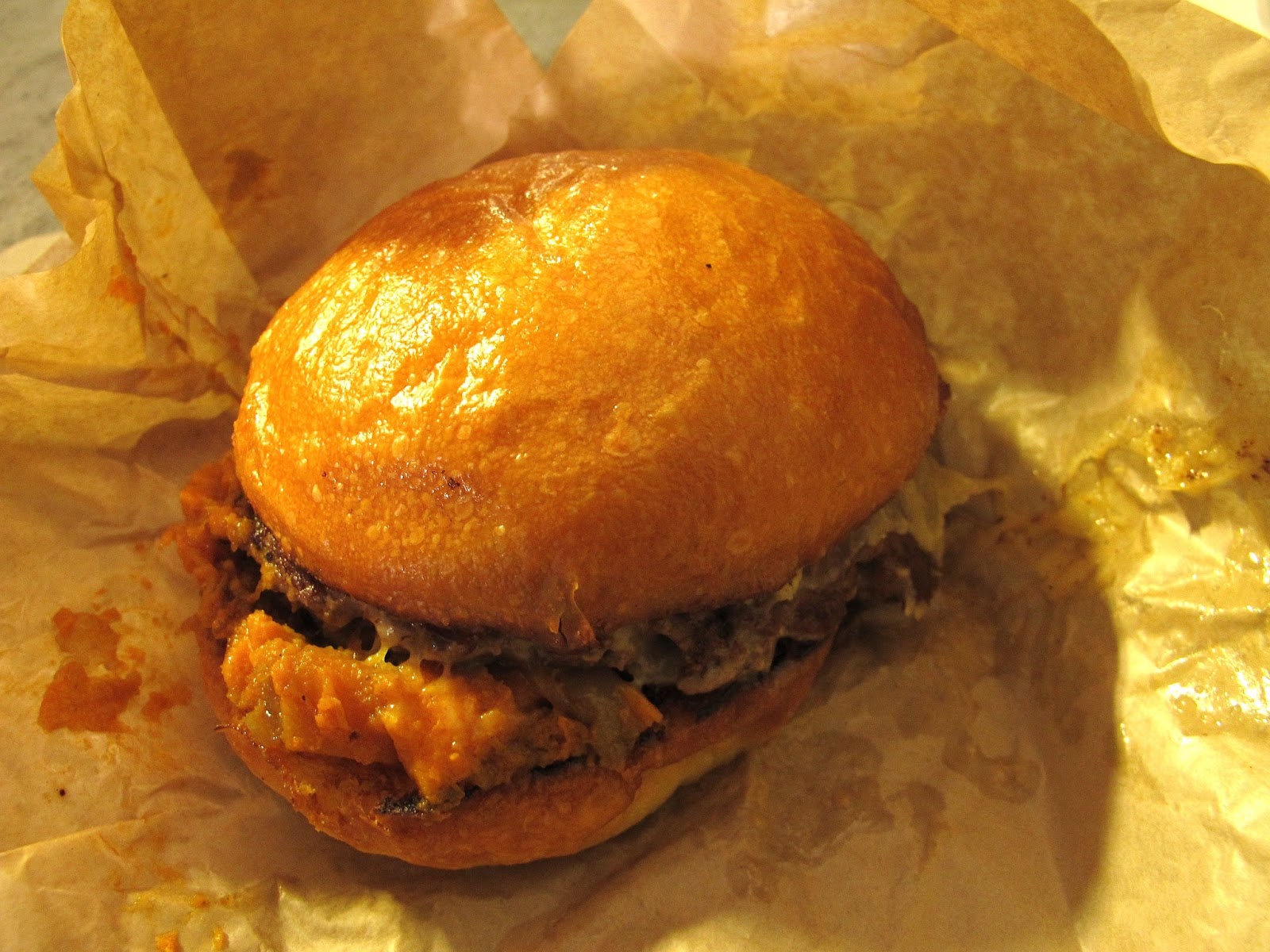
Philly may be known for its cheesesteaks, but that doesn't mean the city hasn't also become famous for its other inter-bread offerings. If sandwiches are your thing, check out Unbreaded, a Philly food blog dedicated to delving into the art of the sandwich as prepared across the city. If you think you've seen and tasted all of Philly's sandwich scene, think again--the blog specializes in reviewing often unexpected culinary combinations. And while many of the offerings may seem exotic, even if you're just craving an old fashion sequence of bread, meat, bread, this blog is the one for you.

Friday, November 6, 2009

Fun Food Fact----Cranberries!

This deliciously tart fruit  was named "crane berry" by Dutch and German settlers after the shape of the fruit's blossoms. When the vines bloom in the late spring and the flowers' light pink petals twist back they have a resemblance to the head and bill of a crane.  Eventually, linguistic laziness worked its magic and the word "crane berry" became cranberry.


Also, 20% of the 400 million pounds of cranberries grown in the United States each year are consumed during Thanksgiving.


Source: http://www.oceanspray.com/about/cranberry_history2.aspx

WIMB: I'll take 5 million

[Part 3 of Worms in my Basement]

After extensive research, I energetically undertook a number of fruit fly extermination and suppression measures as part of Operation Fruit Fly Destruction. First, I set up several homemade traps around the bin. These are simply shallow dishes filled with apple cider vinegar and covered with plastic wrap with small holes poked in it. The flies are attracted to the sweet vinegar and can't get out once they've entered through one of the holes.

I also hung fly tape and put a more solid lid on the bin. Many of the sites I read said that rotting food needs to be buried deep in the bin so that the flies can't reach it to lay their eggs. To this end, I disguised the bin's fertile breeding grounds with several inches of shredded newspaper.

These strategies were all intended to trap the living fruit flies (which can live for up to 2 weeks) and to curb their reproduction. I still needed a way to ensure that my basement's fruit fly population would go extinct.

Enter the nematodes. Beneficial nematodes are marketed as "microscopic warriors" that will eat fruit fly larvae, along with many other garden nuisances. They are often used by gardeners as an organic method for dealing with insect pests. Thus, I found myself, in the wee hours of the morning, ordering 5 million beneficial nematodes off the internet. When they arrived in the mail a couple days later, I applied them to the compost and encouraged them on their mission.

I have had to stop adding more food to the bin as part of the Operation but, in the meantime, my roommates and I have become expert fruit fly trap craftswomen. We know which containers work best (the shallower the better) and the effectiveness of various liquids (red wine and my botched batch of ginger beer are quite tempting) as well as the ideal trapping spots. Now, it is simply a matter of keeping the traps fresh and being patient while the fruit flies live out their short lives and the nematodes work their magic.

Thursday, November 5, 2009

Kiwi Berries


My roommate's mom came to visit a few weeks ago and went grocery shopping for us. Among the many food necessities, she bought us kiwis. I was surprised, but at the same time, thrilled.  I didn't think many other people ate kiwis, and of all other fruits her mom could have bought, she bought kiwi? While I love kiwis, the peeling process always deterred me from eating them.
Then, this past weekend, I was given a new product: kiwi berries. The fruit resembled grapes, yet tasted like the succulent kiwis I had always shied away from. About the size of a large grape, these fruits are coated with a greenish-blue tie dyed pattern.  The skin, much to my surprise, is completely edible. Overall, the unforeseen present as has become one of my favorite fruits. Not only does it merge a sweet berry taste with the tartness of a ripe kiwi, but also the hassle associated with kiwis is no longer present.


Media photo from NZ KiwiBerry Growers Inc.

Wednesday, November 4, 2009

Fruit Crumble

Fruit Crumble
Ingredients:
Filling
6 cups of peeled and cored apples, sliced (usually about 6 large apples)
2 tablespoon of sugar
1/2 teaspoon of ground cinnamon
2 teaspoon fresh lemon juice
Note: you can really use any type of fruit mixture, just keep the amount of fruit about the same. You can use just apples or berries or pears or apricots, etc.  I like to mix different types of fruit together, with apples making up the majority of the filling.  Usually, I use 4-5 apples and 1.5 cups of mixed berries.  If you add berries, you might need to add cornstarch to thicken and it might also take longer to cook. 


Topping
1.5 cups of all purpose flour
1 cup of sugar
1 tsp of salt
2 sticks of cold, unsalted butter, cut into 3/4 inch pieces
2 tsp of cinnamon
Note: You can use more or less topping depending  on how much you like.


Directions
1) Preheat oven to 350-380 F (Temperature really depends on your oven.  The power on mine is a little low, so use 380 F)
2) For filling, mix sugar and cinnamon together.  Then add lemon juice
3) Put apples into mixture and toss to coat
4) Put apples in a baking dish
5) For topping, mix flour, sugar and salt
6) Add butter, stir to coat pieces with flour
7) Rub pieces of butter between your fingers until coarse crumbs form that are 1/2 to 3/4 inch in size.  No loose flour should be present and mixture is pale yellow. 
8) Spread crumbs evenly over the fruit
9) Bake crumble about 40-45 minutes.  Apples should be tender to toothpick.
10) If top not brown, broil on low for a couple of minutes.


Note: Crumble can be made day ahead and kept cooled at room temperature.  Can be reheated in oven for about 15 minutes at 250. Enjoy!


This recipe is modified from Any Season Fruit Crumble from Fearless Baking by Elinor Klivans

Tuesday, November 3, 2009

Indian Food: Restaurant vs. Home-Cooked


When most people go out for Indian food these days, it is somewhat of an event. To be sure, if you’re in the mood for something different and flavor-packed, Indian food is the way to go. At home, I eat Indian food about five times a week, and I still jump at the opportunity to go to an Indian restaurant, in large part because it is an experience in and of itself. What is more interesting, however, is that I can get the same culinary experience at a restaurant than I would at home. 

There is no standard for home-cooked Indian food, as this varies greatly by region and even household. However, I can safely say that if my family was to make the equivalent of Indian restaurant food at home, it would only be on very special occasions. This food, though undoubtedly delicious, is perhaps a little too rich to have on a daily basis. Everyday Indian food, therefore, is characterized by its simplicity. A typical meal that I’d have back home would consist of a few pieces of chapati or roti, which are a sort of flatbread, some type of dal (a soup or stew-like dish made of lentils or dried beans), a portion of vegetables prepared with spices and herbs, and rice. 


By contrast, in a restaurant, you would usually first find a chaat section, which consists of a series of savory "snacks," followed by naan (a thicher, leavened, and oven-baked flatbread), rice, and vegetable dishes. There are normally some chicken, mutton, or lamb entrees; the most common are Tandoori Chicken, which is marinated in yogurt and seasoned with tandoori masala, and Chicken Tikka Masala, a dish with pieces of chicken in a creamy, tomato-based sauce. There are often different types of specially prepared and seasoned dals such as sambar, a type of spicy soup that is especially popular in parts of South India. To top everything off, you can often find an assortment of desserts such as rice pudding, gajar halva (a carrot dessert made with milk and sugar) and gulab jamun, which consists of bits of dough in a sugar syrup infused with rosewater, saffron, or cardamom seeds.

This difference is good to keep in mind; if you ever have the opportunity to literally get a taste of everyday Indian culture, be prepared for a very different, though just as tasty, experience!

Monday, November 2, 2009

Through the wine glass....


Photo by Maggie Edkins

Sunday, November 1, 2009

Xochitl: El Dia de los Muertos

I have been planning to eat at Xochtil on 2nd and Pine with my parents for some time now. We missed our opportunity during restaurant week due to reservation issues, but along came the message that they would be featuring a similar sort of four courses tasting menu during the week before Halloween.


I had a rabbit pozole for my soup: one of the reasons for which I chose the tasting menu and Xochitl in the first place. The rabbit was so tender, and the pozole floating in the broth were very good. Unfortunately, there was neither enough lime nor cilantro to make it ring true to its Latin American nature. This was not too much of a disappointment, since the broth was a bit spicy and very rich.


Next, I sampled a swordfish ceviche with mezcal-infused blood orange juice for an appetizer. I really enjoyed the tender, buttery texture of the cured fish. The juice was very sweet, enhancing the flavors of the tomatoes and cilantro already accenting the fish. It was beautiful presented as well, with the juice poured on table-side by our waiter.

Our main courses were rather interesting and certainly rang of the Yucatan. I had a nicely seared, very flaky halibut on top of a bed of pumpkin seed mole. This was new to me, since I have only had authentic mole negro before. This adaptation was a bit too salty on its own, but when paired with the fish, it became much more tolerable and rather tasty. There was also a standard mole negro on the side, but it was a bit too bitter to accompany the fish well on its own. The dish lacked the cumin-coriander kick I am used to from Mexican cooking back home, but was still very good.


Dessert, which should always be a no-brainer was not. We each tried something different, knowing full well that we would not be hungry after the other courses. Our least favorite was a pumpkin clafouti, which was neither creamy nor sweet enough to be labeled a desert. It lacked the sophistication that such a name should inspire. Needless to say, we were not impressed. However, we did like an almond layer cake in a raspberry soup. We though it was a rather tasty take on cake.


All in all, Xochitl was a fantastic dining experience, and the tasting menu always provides excellent insight regarding a restaurant's specialties. We will probably go there again after trying other places. Though tamed for the standard American pallet, the dishes did ring rather true to their concept of nouveau Mexican fusion-style cuisine, and we enjoyed every course.

Saturday, October 31, 2009

Saturday Blog Lovin' - They test recipes, so you don't have to


Blog: The Bitten Word


Food magazines are good for more than just pretty pictures, as this blog proves.  These bloggers try out recipes from their favorite magazines and chronicle the process.  Some recipes are hits, others misses, but either way, the posts provide helpful tips and plenty of humor. 


Note: Click here to see the original post.

Fall comfort food - Baked Pasta with Butternut Squash and Bacon

Baked Pasta with Butternut Squash and Bacon:  Serves 6
Lots of squash in season right now so make full use of them for your fall comfort food!


Ingredients:
1 box of pasta of your choice (boiled al dente and drained)
1 medium size butternut squash (about 2 lbs)
8 slices bacon (diced)
1 cup button mushrooms (quartered)
1 cup fresh tomatoes (diced)
1 cup sharp cheddar (shredded)
1 cup blue cheese (crumbled)
1 cup walnuts (diced)
1 clove garlic (diced)
1/2 cup fresh sage (diced)
1/2 cup rosemary (diced)
1/2 cup cilantro (for garnish)
1/2 cup Parmesan cheese (for garnish)
Olive oil
Salt and pepper (to individual taste)


Instructions:
  1. Halve and bake the squash with some olive oil, salt and pepper at 350 F for about 30 minutes and allow it to cool.
  2. Prepare sauce in the meantime, using steps 3-6
  3. Stir fry garlic with 2 tablespoons of olive oil until light-brown.
  4. Add in bacon and fry until slightly crispy.
  5. Add in mushrooms, tomato, walnuts and herbs (sage and rosemary), and turn down to low heat until reduced
  6. Season with salt and pepper
  7. Peel and cut squash into 1-inch cubes.
  8. Scatter the sauce and cheeses (cheddar and blue cheese) evenly over the pasta in a 7-inch by 11-inch casserole.
  9. Sprinkle 4 tablespoons of olive oil over the pasta mix.
  10. Bake in preheated oven at 350F for 15 minutes or until cheeses are melted and slightly browned.
  11. Serve with cilantro and Parmesan cheese garnish.